
Rapid business growth is exhilarating, yet it conceals one of the most dangerous paradoxes in corporate finance. When sales double, purchase orders expand, and headcount multiplies, executive leadership often celebrates a booming top line while completely overlooking the quiet depletion of liquid reserves. Companies rarely run out of ideas, talent, or ambition; they run out of cash. In fact, aggressive scaling consumes capital at an accelerating pace. Without disciplined financial architecture in place, an enterprise can easily grow itself straight into bankruptcy.
The mechanism behind this trap is simple yet frequently misdiagnosed. When revenue climbs, receivables stretch across longer billing windows, inventory must be procured weeks or months in advance, and operating overhead swells to support higher output. If customer receipts lag behind vendor payables and weekly payroll obligations, a business quickly burns through its cash reserves. Operating under permanent liquidity stress forces management into a defensive posture—scrambling for emergency credit lines, delaying vendor payments, and firefighting unexpected expenses rather than executing strategic initiatives.
Transforming cash flow chaos into a predictable operating runway requires shifting leadership focus away from vanity metrics toward operational liquidity. Measuring the Cash Conversion Cycle, stress-testing asset utilization, auditing structural facility upkeep, and maintaining contingency liquidity buffers are essential disciplines. By systematically managing working capital, business leaders can build a resilient enterprise capable of funding its own growth, withstanding unexpected market shocks, and scaling sustainably for years to come.
Establishing Financial Baselines and Optimizing Daily Administrative Workflows
Before an enterprise can stabilize its runway, leadership must establish absolute visibility over its cash position. Many growing organizations confuse accounting profits with cash flow. Accrual accounting recognizes revenue the moment an invoice is generated and books expenses when a purchase order is approved. However, a paper profit recorded on an income statement cannot cover weekly payroll or settle raw material bills if that cash remains trapped in uncollected receivables.
Gaining control of your cash starts with calculating and shortening your Cash Conversion Cycle (CCC). The Cash Conversion Cycle measures the precise number of days it takes for capital invested in raw inventory and labor to travel through operational workflows, convert into customer invoices, and return to company bank accounts as collected funds. The formula brings together three vital working capital components:
- Days Sales Outstanding (DSO): The average number of days required to collect payment after a sale occurs. High DSO indicates loose credit policies or sluggish collection workflows.
- Days Inventory Outstanding (DIO): The average time finished goods and raw materials sit in storage before being converted into revenue. High DIO ties up cash in idle physical assets.
- Days Payable Outstanding (DPO): The average duration an enterprise takes to pay its trade creditors and vendors. Optimizing DPO allows a company to preserve cash for operations while maintaining favorable vendor terms.
Managing these moving parts demands rigorous financial tracking rather than relying on monthly gut checks. Bringing on a qualified bookkeeper to oversee daily transactional reconciliations is often the highest-ROI operational investment a scaling company can make. An experienced financial professional ensures that customer invoices are delivered immediately upon job completion, enforces strict thirty-day receivables milestones, flags duplicate supplier billing, and provides weekly accounts receivable aging schedules to executive leadership.
Beyond tracking gross receipts, stabilizing working capital requires auditing administrative workflows and routine recurring overhead. Mid-market companies often bleed thousands of dollars every month through overlooked office leases, outdated subscription software, and poorly structured administrative equipment contracts that auto-renew without executive review.
A common example of creeping administrative overhead occurs in back-office document workflows. Organizations frequently sign multi-year master agreements for office printing and document digitization without benchmarking them against actual staff utilization. Contracting a transparent, responsive copier service provider allows leadership to right-size physical hardware, eliminate predatory per-page overage fees, and combine maintenance into a predictable monthly expense. Auditing these utility and administrative retainers frees up thousands of dollars in monthly operating cash, directly extending your runway.
To systematically audit administrative cash drains, establish these protocols:
- Implement an automated invoicing cadence that delivers billing statements within twenty-four hours of product delivery or milestone completion.
- Offer a two-percent cash discount for customer invoices settled within ten business days, directly accelerating cash receipts.
- Require executive sign-off for any recurring SaaS subscription, administrative hardware lease, or vendor agreement with a term longer than twelve months.
- Review aged receivables weekly, immediately halting work for any account with balances outstanding past sixty days.
Securing Physical Inventory and Controlling Operational Facility Water Quality
Inventory management represents one of the most capital-intensive elements of working capital management. For manufacturing, assembly, retail, and wholesale distribution companies, expanding inventory to keep pace with sales projections can drain available liquidity. When working capital is tied up in slow-moving finished goods or raw materials sitting on warehouse racks, that capital is unavailable for payroll, marketing, or research and development.
Scaling operations often leads companies into the trap of signing premature, long-term commercial real estate leases. When product volume temporarily exceeds warehouse capacity, executives frequently panic and lease expensive commercial warehouse space, locking the business into five-year lease commitments with hefty security deposits and fixed utility overhead.
A far more flexible, capital-efficient alternative is deploying modular, ground-level storage solutions directly on existing property footprints. Sourcing a weather-resistant shipping container for sale provides immediate, secure storage for raw goods, seasonal overflow, or surplus staging materials at a fraction of the cost of commercial real estate leases. Procuring modular storage units preserves liquidity, avoids commercial property taxes, and creates an asset that can be relocated or resold on the secondary market when inventory stabilizes.
Alongside physical storage management, protecting facility infrastructure from operational damage is vital for safeguarding capital. Companies running production machinery, industrial wash stations, steam boilers, or commercial kitchen appliances often fail to consider the destructive nature of regional municipal water supplies. Hard water laden with dissolved calcium, magnesium, and mineral scale clogs plumbing lines, degrades heating coils, and damages expensive production machinery.
Preventing premature industrial equipment failure requires installing a high-capacity industrial water softener. Conditioning incoming water before it enters commercial boilers, chillers, and washing assemblies prevents scale buildup, preserves heat transfer efficiency, and cuts utility power usage. More importantly, it avoids emergency plumbing repairs that can halt an entire production shift and trigger thousands of dollars in unexpected capital expenditures.
To optimize physical assets and protect operational equipment, implement these procedures:
- Establish strict Economic Order Quantity (EOQ) thresholds for every SKU to prevent over-purchasing raw inputs based on unverified market forecasts.
- Conduct monthly dead-stock audits, aggressively discounting or liquidating items that have remained untouched on storage racks for over ninety days.
- Schedule quarterly water testing and mineral scale audits on all primary boiler lines, cooling towers, and commercial plumbing manifolds.
- Log preventive maintenance schedules for all utility-treatment systems to verify salt levels, resin bed health, and operational filtration rates.
Protecting Physical Plants and Contracting Regular Facility Maintenance
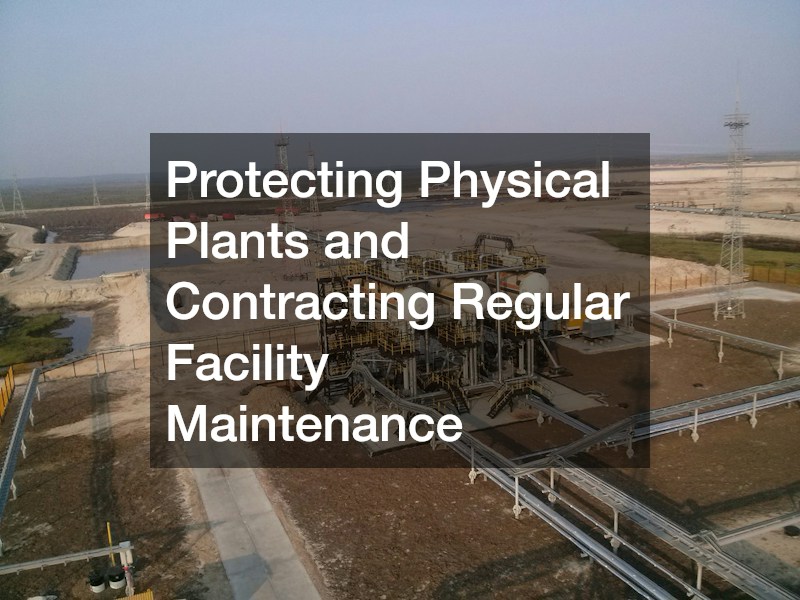
The physical plant housing your business represents the operational bedrock of the enterprise. Yet, when cash flow feels tight, many executive teams make the dangerous mistake of deferring structural facility maintenance. They delay building envelope inspections, postpone heating and cooling service, and ignore minor exterior wear, treating deferred maintenance as an easy way to conserve monthly capital.
This strategy almost always backfires. Deferring facility maintenance does not save money; it converts small, predictable operating expenses into sudden, catastrophic capital disasters that can wipe out months of cash runway. A failed industrial roof, a flooded assembly floor, or a compromised electrical vault will instantly halt production, ruin stored inventory, and trigger emergency-tier contractor repair costs.
The building’s roof is the most critical and vulnerable component of your physical plant. Commercial flat and low-slope roofs endure relentless UV degradation, thermal shock, ponding rainwater, and mechanical foot traffic from servicing HVAC equipment. Partnering with a licensed commercial roofer to perform scheduled biannual inspections, seal perimeter flashings, and repair ponding seams prevents minor water intrusion from rotting structural decking. Applying preventive elastomeric coatings prolongs membrane life by decades, deferring six-figure roof replacements and keeping your working capital focused on core operations.
Inside the facility, maintaining pristine operational conditions is equally critical for equipment longevity, employee safety, and health code compliance. In manufacturing environments, food processing centers, packaging plants, and high-density offices, accumulated dust, grease, and debris accelerate machine wear, increase slip-and-fall hazards, and contribute to employee absenteeism.
Engaging a dedicated, professional janitorial service establishes an essential layer of preventive facility defense. Contracted cleaning specialists utilize commercial-grade floor scrubbers, sanitization protocols, and HEPA-filtered extraction machinery to remove industrial contaminants, protect commercial floor finishes, and keep cleanrooms within certified operating tolerances. A clean, well-maintained workspace prevents regulatory fines, boosts employee morale, and preserves the working capital that would otherwise be lost to workers’ compensation claims or workplace safety citations.
Mitigating Fleet Logistics Delays and Securing Commercial Property Assets
For businesses that rely on commercial transport vehicles, box trucks, field-service vans, or logistics fleets, physical movement is the engine of revenue generation. A product sitting in a broken-down delivery van or stranded at an intersection is a product that cannot be billed, delivered, or converted into working capital.
Vehicle breakdowns represent a significant operational and financial disruption for growing fleets. When a transport vehicle suffers an engine failure, transmission slip, or suspension collapse on a major roadway, the costs quickly escalate beyond simple mechanical repairs. Late delivery penalties accrue, perishable goods spoil, driver hours are wasted, and client trust is damaged.
Establishing an account with a reliable local tow truck service gives logistics managers a critical rapid-response safety net. Negotiating corporate towing rates and priority response agreements ensures stranded fleet vehicles are cleared from traffic corridors and delivered to certified repair depots immediately. Rapid vehicle recovery keeps supply chains moving, protects drivers, and prevents minor roadside incidents from turning into major fulfillment disasters.
Alongside fleet mobility, protecting physical assets, storage yards, and exterior facilities from property crime is vital for safeguarding working capital. Equipment yards holding heavy machinery, transport trailers, raw metal stock, and construction materials face constant threats from theft, unauthorized entry, and employee inventory shrinkage. A single stolen vehicle or stripped copper run can cost an enterprise tens of thousands of dollars in lost equity and insurance deductibles.
Securing commercial perimeters requires investing in enterprise-grade security monitoring systems. Installing industrial police video equipment, optical thermal cameras, and secure digital recording platforms provides real-time, tamper-proof surveillance across outdoor staging grounds and vehicle lots. High-definition perimeter cameras act as a strong visual deterrent, provide clear documentation for law enforcement in the event of trespassing, and protect the company from fraudulent premises liability claims.
Managing Workplace Liability, Legal Reserves, and Contingency Capital
A company’s cash runway can be depleted just as quickly by unexpected legal liabilities and workforce disruptions as by operating losses. As an organization scales past fifty, one hundred, or two hundred employees, its exposure to regulatory mandates, occupational safety claims, and employment disputes grows exponentially. An unexpected lawsuit or regulatory audit can quickly drain unreserved working capital.
Occupational health, safe workplace practices, and employee disability claims require proactive management. When an employee suffers a long-term injury or develops a chronic medical condition that impacts their ability to work, navigating federal guidelines, the Americans with Disabilities Act (ADA), and state workers’ compensation systems becomes complex and legally sensitive.
Consulting with an experienced disability lawyer ensures that workplace accommodation requests, statutory leave periods, and long-term disability claims are handled within federal regulatory boundaries. Proper legal oversight protects the enterprise from wrongful termination claims and regulatory retaliation penalties while ensuring injured employees receive fair, lawful treatment. Establishing structured, legally compliant return-to-work protocols minimizes workers’ compensation insurance surcharges, shielding your cash reserves from unpredictable premium hikes.
Finally, managing enterprise risk requires maintaining dedicated, liquid contingency reserves for urgent operational and legal emergencies. While executive teams plan for standard capital investments and marketing budgets, unexpected real-world crises inevitably arise. When a key executive, fleet transport driver, or commercial operator is detained following a severe roadside incident, municipal compliance misunderstanding, or local enforcement action, the enterprise must act immediately to secure the individual’s release and maintain operational continuity.
Allocating emergency liquidity to quickly arrange bail protects company personnel, ensures immediate legal representation, and prevents critical supply chain or field operations from grinding to a halt. Maintaining an isolated, liquid emergency reserve guarantees that unexpected legal emergencies can be resolved without diverting capital from day-to-day payroll or critical vendor disbursements.
Scaling a business successfully is not just a test of market demand or marketing ingenuity; it is a test of financial stamina and operational discipline. The business landscape is littered with promising companies that generated record sales one quarter and closed their doors the next because their cash runway collapsed beneath them.
By understanding the dynamics of the Cash Conversion Cycle, deploying flexible physical assets, auditing structural facility upkeep, and maintaining dedicated legal and contingency reserves, you insulate your company against liquidity shocks. Treating working capital management as a core daily discipline transforms cash flow from an unpredictable crisis into a predictable, strategic asset. With visibility over your numbers and safeguards across your operations, you can scale your enterprise with confidence, knowing your runway is secure and built to support long-term growth.